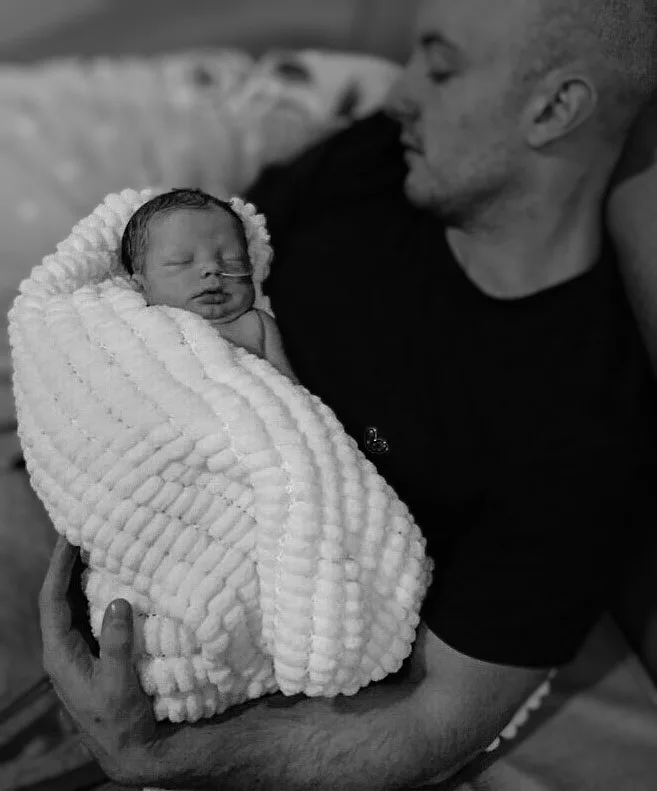

Lukas Barry, born at Macclesfield Hospital, lived nine days. His dad's book, The Parent as the Blueprint, comes out on 27 October, his 10th birthday.
Lukas Barry was born at Macclesfield Hospital on 27 October 2016 by emergency caesarean section. He died nine days later. On 27 October this year, what would have been his tenth birthday, his father Carl Barry, from Congleton, is publishing his first book, The Parent as the Blueprint.
The book comes out in paperback and on Kindle through Amazon, independently published through Amazon KDP. Carl is a father of three daughters. He spent five years in the British Army’s Intelligence Corps and five years teaching maths in secondary schools, and he is now Head Coach at Alpha21, which he describes as an international health and performance coaching company.
He got in touch with the Macclesfield Times ahead of Baby Loss Awareness Week and answered our questions in writing. What follows is mostly his own words.
Nine days at Liverpool Women’s Hospital
“Lukas was born at Macclesfield Hospital by emergency C-section. Very quickly afterwards we were transferred to Liverpool Women’s Hospital, where we spent the nine days of his life,” Carl said.
“I will always be incredibly grateful to the doctors and nurses there. They were dealing with an unimaginably difficult medical situation, but they never lost sight of the fact that we were a mum and dad spending precious time with our son. Their expertise, care and understanding helped make those nine days with Lukas as special as they possibly could have been in the circumstances.”
“Those nine days are obviously associated with enormous sadness, but they are also nine days in which we held him, loved him and got to be his parents. I wouldn’t want the story of Lukas to be reduced only to the fact that he died.”
Looking back, he says the family did not know where to turn afterwards. “One thing I recognise looking back is that after Lukas died, we weren’t fully aware of what support existed for bereaved parents. That is something I would really like to help change for other families.”
“Organisations such as Sands provide support and information for people affected by pregnancy and baby loss, and part of the reason I’m willing to speak publicly now is that somebody going through this should know that support is out there.”
“I think Baby Loss Awareness Week is important for exactly that reason. It gives families permission to talk about babies who are still enormously important to them, while also helping people who are at the beginning of that experience find organisations and communities that can support them.”
“Why do you always tell us to be careful?”
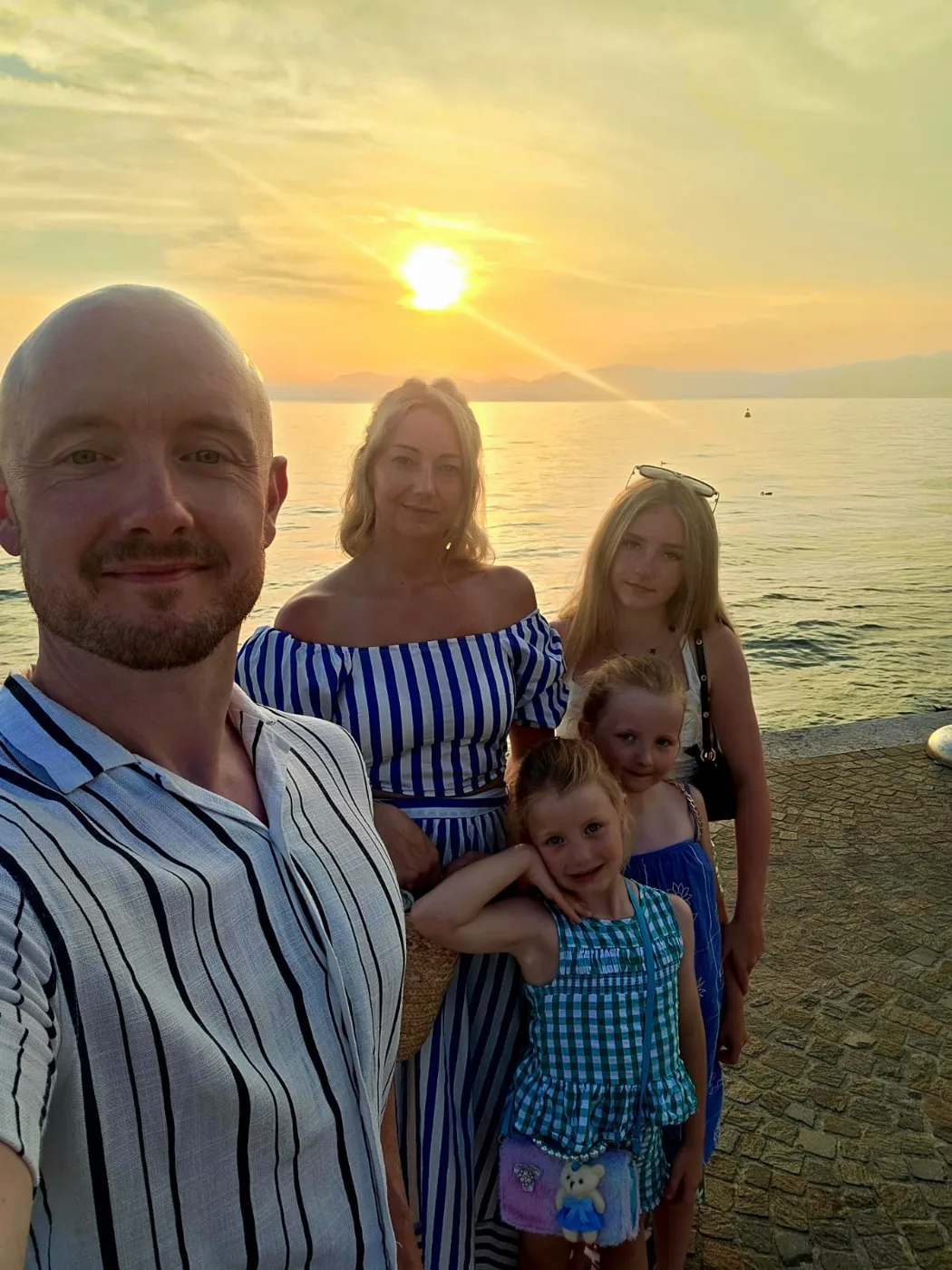
The book began as private writing about fatherhood, his own upbringing, losing Lukas, his years teaching, and patterns he kept seeing in the men he coaches. One moment with his youngest daughter changed how he saw it.
She was jumping off the sofa and he told her straight away to stop and be careful. She looked at him and said: “Why do you always tell us to be careful? We’re just having fun.”
“That question made me realise that, almost a decade after losing Lukas, the experience was still influencing the father my daughters were growing up with,” he wrote. “I understood the fear underneath my reaction. She didn’t. She simply experienced her dad repeatedly making ordinary childhood risks feel more dangerous than they were.”
That led to the wider question behind the book: what children absorb from their parents’ health, habits, stress, fears and behaviour, often without anyone deliberately teaching it to them.
We asked what he has changed at home since.
“The biggest change has probably been learning to create a gap between feeling fear and immediately acting on it. I still have the instinct to protect my daughters. I don’t think that will ever disappear. But I’m much more conscious now of asking myself: is there actually danger here, or is some of this my own history speaking?”
“I try to allow them to experience appropriate risk, make mistakes, struggle with things and solve problems without immediately stepping in.”
“That moment also taught me something that has become a big theme in the book: children experience our behaviour, not our intentions. I might know that something I’m saying is coming from love. My daughter doesn’t automatically experience the love or understand the history underneath it. She experiences what I actually say and do.”
“I’m certainly not perfect at it now. I still catch myself saying ‘be careful’. The difference is that I notice it, and I understand where it might be coming from. For me, that is what this book is really about. Not becoming a perfect parent, but becoming a more conscious one.”
Why publish it at all
“The book actually started as something very private,” Carl said. “For a long time I had no intention of publishing it. Eventually I realised that if some of those thoughts could help another parent reflect on their own family, leaving it sitting on my laptop didn’t really serve anybody.”
“I deliberately chose 27 October because it would have been Lukas’s tenth birthday. Publishing it on Lukas’s birthday feels particularly significant because something positive is now coming from something that was so heartbreaking for our family.”
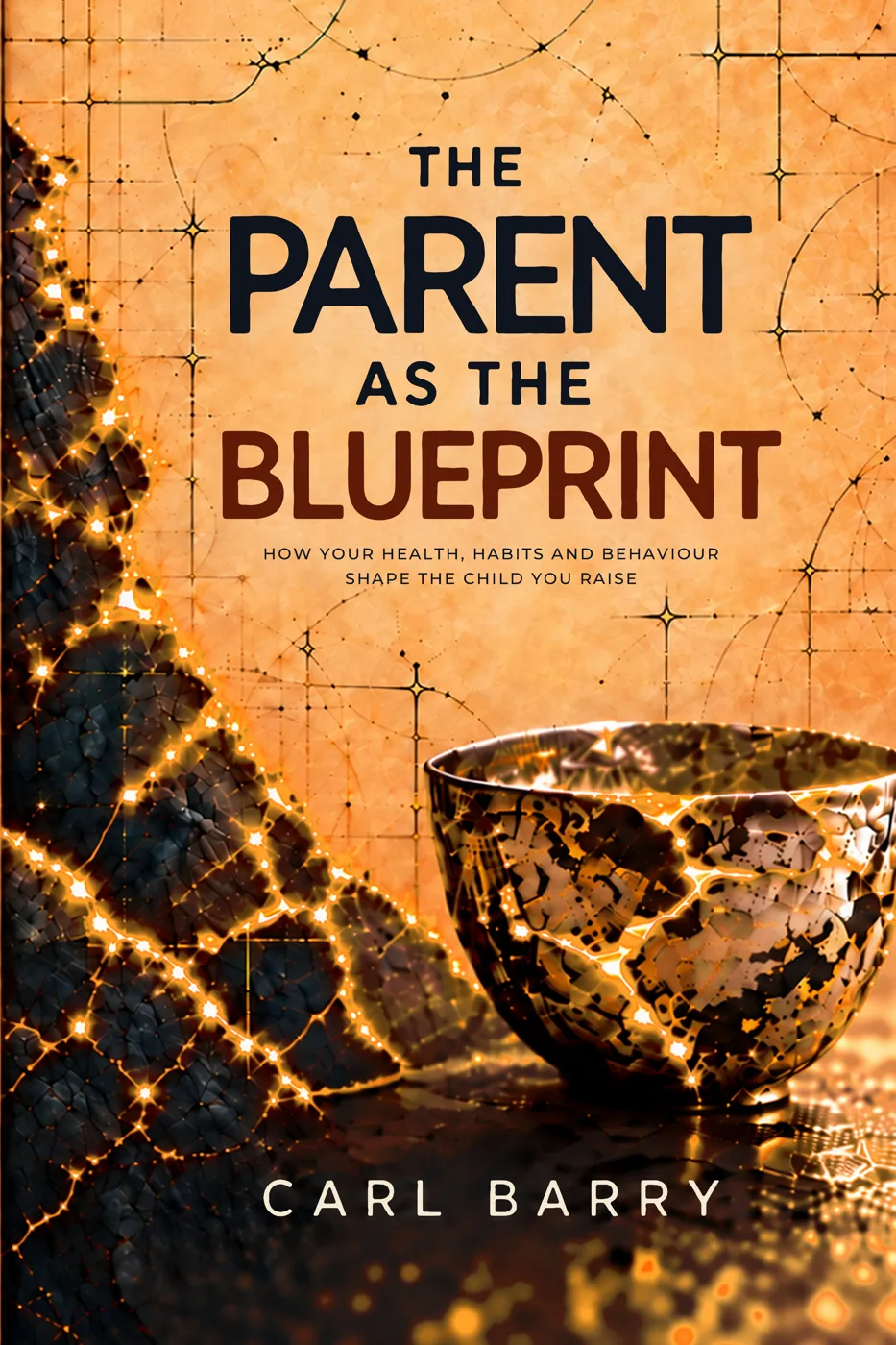
The cover’s subtitle sets out the subject: how your health, habits and behaviour shape the child you raise.
To a father going through it now
We asked what he would say to a father in Cheshire going through baby loss today.
“I would probably start by telling him that there is no correct way to grieve and no timetable he needs to meet.”
“As men, I think there can be a temptation to become the person who holds everything together, particularly when the woman you love is grieving too. You focus on what needs doing. You try to protect everyone else. You go back to work. You function. And from the outside that can look like coping. But functioning and processing something are not necessarily the same thing.”
“I’d encourage him to talk when he is able to, accept support and know that there are organisations such as Sands specifically there for families experiencing baby loss. I would also tell him that grief may show up again in ways he doesn’t expect, sometimes years later. For me it did.”
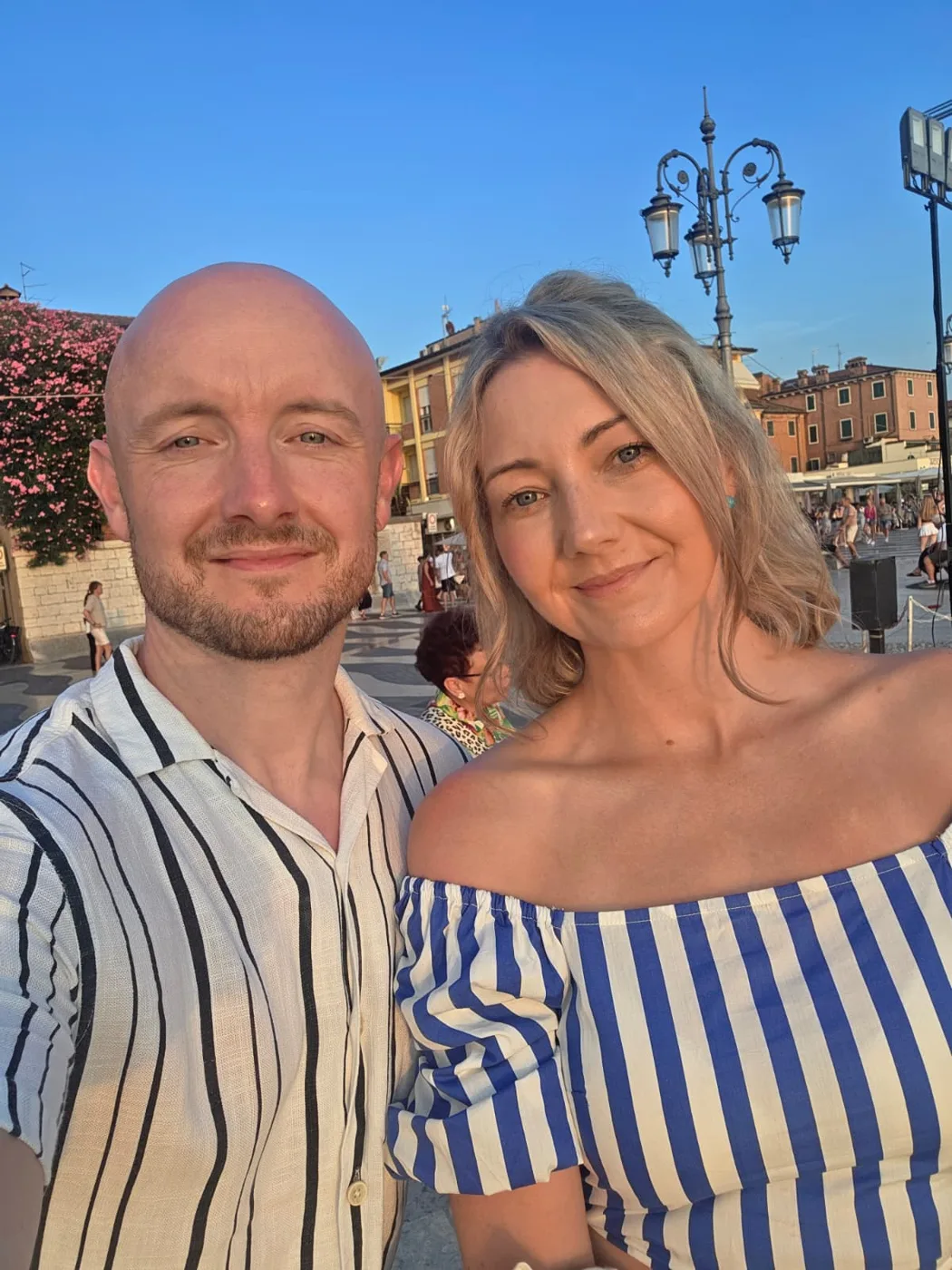
“That doesn’t mean life cannot become full again. I have three daughters I adore, a wife I love, a career I’m incredibly grateful for and a very full life. Lukas is still part of that life. You don’t have to choose between moving forward and remembering your child. You can do both.”
27 October
The family will mark the day as they do every year. “We’ll come together, we’ll remember Lukas, we’ll talk about him and we’ll cry a little bit,” Carl said. “This year will obviously feel different because it would have been his tenth birthday, strange as it still feels like yesterday. But for the first time, there is also something very positive happening on that date.”
“I would never try to turn what happened to Lukas into something that needed to happen for a reason. I would change what happened in a heartbeat if I could. But I can choose what I do with the person that experience helped shape.”
“To see something that began with thoughts about loss, fatherhood and the way our experiences influence our children eventually become a book that might help another parent feels like a genuinely positive thing to be able to associate with his tenth birthday.”
“His life lasted nine days. His influence on mine will never end.”
What it means for you
- The book: The Parent as the Blueprint by Carl Barry is out on Tuesday 27 October in paperback and on Kindle through Amazon.
- If you have lost a baby: Carl’s point is that many parents do not know support exists. in his words, organisations such as Sands “provide support and information for people affected by pregnancy and baby loss”.
- If you know someone who has: Baby Loss Awareness Week is, in Carl’s words, a time that “gives families permission to talk about babies who are still enormously important to them”.
Have your say